

Survival through Quality
PRODUCT CENTER
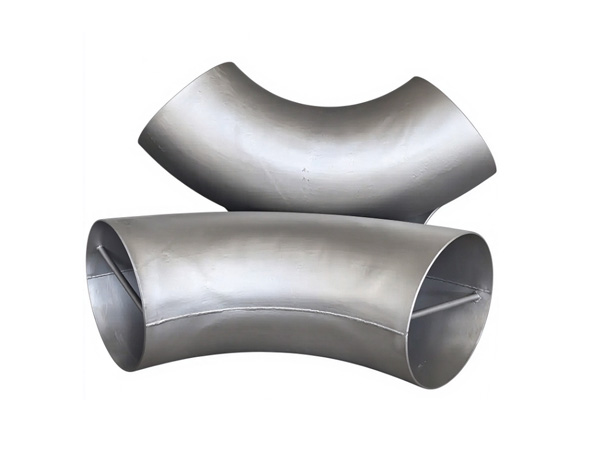
Butt weld elbow
What is a Butt Weld Elbow?
A butt weld elbow is a pipe fitting beveled at both ends so it can be directly welded to the pipe, creating a permanent, full-strength joint. Available in 45, 90, and 180 degree angles, butt weld elbows provide the strongest and most leak-resistant method of changing flow direction in industrial piping. They are the standard choice for process piping where a welded, monolithic system is required.
Standards and Specifications
Butt weld elbows are manufactured to ASME B16.9 for factory-made fittings and ASME B16.28 for shortened radius. They conform to MSS SP-75, ASTM A234 WPB, and EN 10253. Sizes range from NPS 1/2 to NPS 48 (DN15 to DN1200), with wall schedules from SCH 10 to SCH XXS. Both long radius (R=1.5D) and short radius (R=1.0D) patterns are available, with ends beveled per standard dimensions.
Materials and Grades
Carbon steel A234 WPB is the most common grade for oil, gas, water, and steam. Stainless steel 304/304L and 316/316L provide corrosion resistance for chemical, food, and marine service. Alloy steel WP11, WP22, and WP91 are used in high-temperature refinery and power piping. Low-temperature A420 WPL6 serves refrigeration and cryogenic systems. All material is traceable by heat number.
Pressure and Temperature Ratings
Butt weld elbows are rated for pressure classes 150 through 2500. The full-penetration weld creates a joint as strong as the pipe itself, allowing the fitting to operate at the full pressure-temperature rating of the piping system. Temperature range depends on material, from minus 46 degrees Celsius to 600 degrees Celsius. Each elbow is hydrostatically tested.
Applications
Butt weld elbows are used in refineries, petrochemical plants, oil and gas transmission, power generation, chemical processing, shipbuilding, and high-pressure process piping. They are specified for critical, high-pressure, hazardous, or buried service where threaded or flanged joints would present a leakage risk.
Advantages
The butt-welded joint provides permanent, leak-free, full-strength connection with no gasket or bolted joint to maintain. The smooth internal bore offers low flow resistance and high erosion resistance. Butt weld elbows are suitable for high pressure, high temperature, vibration, and thermal cycling conditions. They reduce installation space compared with flanged fittings and eliminate the need for periodic bolt torquing.
Installation Guidelines
Bevel the pipe end to match the elbow bevel, clean both surfaces, and align with proper root gap. Tack weld in position, then complete the full-penetration joint using GTAW root and SMAW or FCAW fill passes. Apply preheat and post-weld heat treatment for thick-wall or alloy materials. Radiographic or ultrasonic inspection verifies weld integrity.
Quality Assurance
Each butt weld elbow is marked with grade, heat number, size, wall thickness, radius, and manufacturer's stamp. Inspection includes dimensional checks, wall thickness verification, visual examination, and NDE when specified. Material test certificates to EN 10204 3.1 are provided. Elbows are coated with rust-preventive oil and bevel ends are protected with plastic caps for shipping.